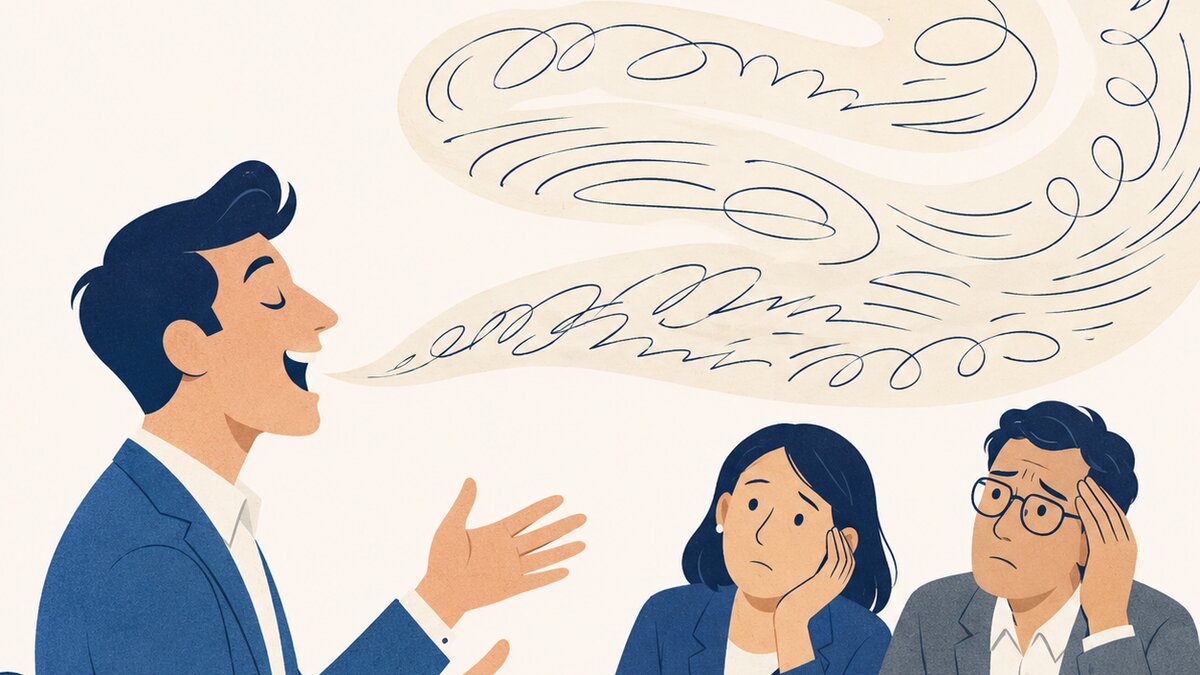
Everyone noticed it. No one said anything.
A high-tech client of mine recently made a job offer to a director they were thrilled about. Mario was extremely qualified. He came directly from their top competitor. He seemed like a genuinely nice guy.
I pushed a bit: “Was there even one thing in the interviews that gave you pause?”
He frowned, paused in thought, then finally said, “Well… Mario did talk a lot. Once he got wound up on a particular subject, he didn’t really stop. But… you know… he was probably a bit nervous. None of us felt this was even remotely a dealbreaker. He was such a perfect fit for our open role.”
A pattern hiding in plain sight
A few weeks after Mario started, a few team members mentioned to my client that Mario had a lot to say in their initial meetings — at a time he could have benefited greatly from asking curious questions to get oriented instead.
No one said anything to Mario. As my client put it: “We didn’t want to demotivate a brand-new team member. And we wanted to be sure it was really a problem. Talking a lot — well, it’s not exactly a crime. And we generally like this guy.”
Six months later
Mario’s tendency to talk — and not listen — has caught up with him. Productivity in his group has suffered. Several clients have joked about bringing their questions or issues to other team members, since Mario’s answers are, well, a bit overblown.
And now the conversation is much harder.
That’s how delayed difficult conversations work. In week one, it’s a small correction — perhaps a five-minute conversation on the way to a meeting. By month three, it needs preparation, and the person is surprised: “Wait… this has been a problem for three months?” By month six, you may have a full-blown performance issue, damaged trust, documentation, formal conversations — even the risk of losing the employee.
What leaders often miss
The problem did not necessarily get dramatically worse. The delay in addressing it made things worse. That’s on us.
We postpone the early conversation because awkward feels expensive. We sense the issue, then talk ourselves into believing it isn’t “problematic enough” to mention. But awkward is usually cheap. Avoidance is expensive.
Early feedback gives the other person something invaluable: the chance to fix a small problem while it is still small. Ultimately, it simply isn’t fair to someone not to say something.
What conversation are you making more expensive by waiting?